


Shooting a massive corporate conference or a multi-day music festival is only the first half of a photographer's job. Once the event concludes, professionals face the daunting task of culling, editing, and organizing thousands of high-resolution images. For those who monetize their unbranded, model-released images through microstock agencies like Adobe Stock, the workload instantly doubles. This grueling post-processing phase is exactly where event photographers save 10 hours with ai tagging.
Manually typing titles, descriptions, and up to fifty relevant keywords per image is a mind-numbing process that drains creative energy. Every minute spent typing metadata is a minute stolen from marketing your business, booking new clients, or actually being behind the camera. Furthermore, human error during manual entry often leads to inconsistent tagging, which ultimately hurts your search rankings on stock platforms.
Thankfully, artificial intelligence has completely revolutionized this tedious workflow for digital creators. By using a specialized metadata generator like meita.ai, you can automate your keywording process with incredible accuracy and speed. Let us explore how intelligent software analyzes your images, generates buyer-focused tags, and transforms your photography business into a highly efficient passive income machine.
The Hidden Cost of Manual Keywording for Stock Photography
Wasted Hours on Repetitive Tasks
The most significant drain on a stock contributor's time is the sheer repetition required for manual metadata entry. If you upload a batch of two hundred images from a recent trade show, each photo requires unique, descriptive keywords to be discovered by buyers. Brainstorming and typing fifty relevant words for hundreds of similar images can quickly consume your entire weekend.
This repetitive typing inevitably leads to mental fatigue and a sharp decline in keyword quality. When creators get tired, they tend to copy and paste generic tags across completely different images just to finish the batch faster. Unfortunately, this lazy keywording approach severely damages your visibility in crowded stock marketplaces like Adobe Stock. It is no surprise that event photographers save 10 hours with ai tagging when processing massive weekend galleries.
Lost Revenue Potential from Stock Agencies
Every hour you delay uploading your images because you are dreading the keywording process is lost revenue. In the fast-paced world of microstock photography, trending topics and seasonal demands require rapid uploads to capture buyer interest. If your incredible corporate event photos sit on a hard drive for months waiting to be tagged, you miss out on peak purchasing seasons.
Moreover, inaccurate or sparse metadata ensures that your images will never appear on the first page of search results. Stock photography buyers rarely scroll past the first few pages when looking for the perfect asset. If you are lacking specific, long-tail descriptive words, your potential royalties will simply go to competing photographers who optimized their portfolios better.
The Microstock Metadata Bottleneck
Many talented creators eventually abandon their microstock portfolios entirely because the metadata bottleneck becomes too overwhelming. Building a lucrative library on platforms like Shutterstock or iStock requires consistent, high-volume uploading over a long period. When the administrative burden outweighs the joy of photography, burnout is usually the final result.
By removing the manual data entry barrier, photographers can finally unlock the true earning potential of their hard drives. Your archives are likely full of generic, unbranded event shots that could be earning passive income right now. Overcoming this bottleneck is the critical first step toward building a sustainable, profitable photography business.
Transforming the Workflow With AI Metadata Generators
How Artificial Intelligence Sees Your Photos
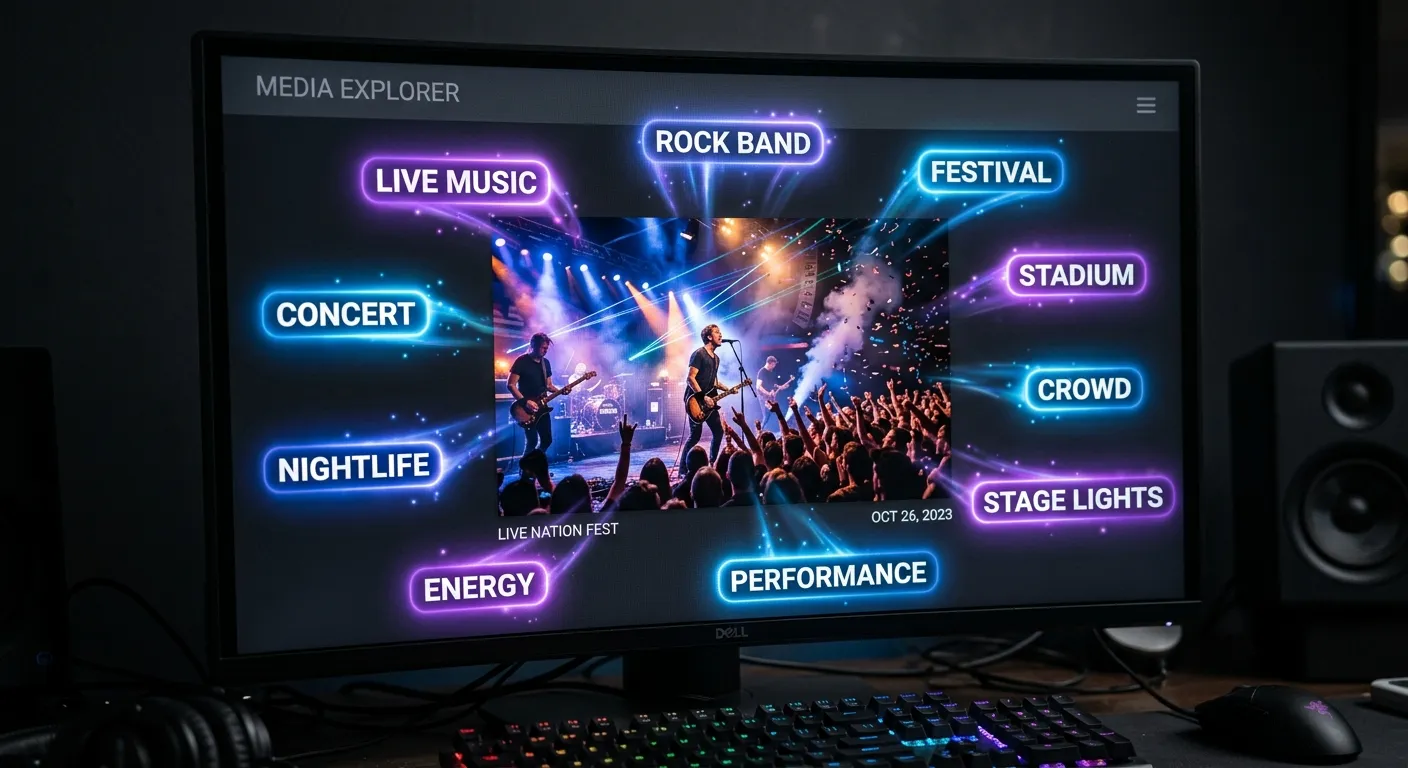
Modern AI metadata tools use advanced computer vision algorithms to "see" and comprehend your images just like a human would. When you upload a photo to a platform like meita.ai, the system instantly scans the visual elements, recognizing objects, lighting, emotions, and concepts. It goes far beyond simply identifying a "person" or a "camera" within the frame.
The artificial intelligence understands the context of the scene, distinguishing between a casual outdoor concert and a formal corporate seminar. It recognizes specific color palettes, photographic techniques like bokeh, and the overarching mood of the image. This deep visual understanding allows the software to suggest highly relevant concepts that human taggers frequently overlook.
Generating Highly Relevant Tags Instantly
Once the image is analyzed, the software generates a comprehensive list of titles, descriptions, and keywords in a matter of seconds. Instead of staring at a blank screen trying to think of synonyms for "business meeting," the AI provides a curated list immediately. You simply review the suggestions, make any minor tweaks, and export the data.
This instantaneous generation completely eliminates writer's block from your post-production workflow. A specialized platform like meita.ai ensures that you hit the optimal number of keywords required by major microstock agencies without padding the list with irrelevant terms. The speed at which this happens is truly game-changing for high-volume shooters.
Seamless Integration with Adobe Stock and Beyond
The best AI tagging tools are designed specifically with the microstock contributor in mind. They allow you to export your perfectly formatted metadata into standardized CSV files that are accepted universally. This means you can upload your data seamlessly to Adobe Stock, Alamy, Dreamstime, and other leading platforms without reformatting.
By embedding the metadata directly into the EXIF or IPTC fields of your JPEG files, the upload process becomes completely frictionless. When you drag and drop your files into the agency's portal, all your titles and keywords populate automatically. This seamless pipeline drastically reduces the friction of managing portfolios across multiple different stock websites.
Why Precision Tagging Increases Your Microstock Sales
Mastering Search Algorithm Visibility
Stock photography search engines operate very similarly to Google, prioritizing highly relevant, well-described content to show to their users. If your metadata exactly matches what the buyer types into the search bar, your image will rank higher in the results. Precision is far more important than quantity when it comes to outsmarting these complex search algorithms.
AI generators are specifically trained on vast datasets of high-performing stock imagery to understand which keywords actually convert into sales. They naturally include crucial LSI (Latent Semantic Indexing) keywords that a human might forget to include. When you realize how event photographers save 10 hours with ai tagging, you understand the true value of workflow automation.
Capturing Buyer Intent Accurately
Understanding buyer intent is the secret weapon of the most successful microstock contributors in the industry. An art director searching for "diverse corporate leadership team collaboration" is looking for very specific conceptual themes. If your image only has basic tags like "people," "office," and "business," it will never reach that high-paying buyer.
Tools like meita.ai excel at generating these conceptual, intent-driven keywords alongside literal physical descriptions of the image. The AI recognizes themes like "teamwork," "innovation," "leadership," and "success" based on the body language of the subjects. Capturing these abstract concepts is what bridges the gap between a nice photo and a profitable commercial asset.
Reducing Rejection Rates Across Platforms
Every microstock agency employs strict reviewers who will reject your images for keyword spamming or inaccurate descriptions. If you include the word "Apple" on a photo of a generic laptop, your image will likely be flagged for trademark violations. Dealing with rejected batches and having to resubmit files is incredibly frustrating and time-consuming.
Artificial intelligence significantly reduces these rejection rates by keeping your keywords tightly focused and highly accurate. Advanced tagging platforms automatically filter out restricted trademarked terms and ensure your descriptions meet agency guidelines. This leads to faster approval times, allowing your images to go live and start earning money much quicker.
Maximizing Passive Income Through Smart Automation

Scaling Your Microstock Portfolio Faster
The undeniable truth of the microstock industry is that portfolio size directly correlates with your monthly royalty earnings. A portfolio of fifty images might buy you a cup of coffee, but a library of fifty thousand images can pay your mortgage. To reach that level of volume, you absolutely must rely on intelligent workflow automation.
Using an AI metadata generator allows you to process hundreds of archival images per day with minimal effort. You can finally dig into those old hard drives full of forgotten event photos and monetize them rapidly. Scaling your portfolio becomes an exciting, manageable daily habit rather than a dreaded administrative chore.
Focusing on Shooting Instead of Typing
Your unique value as a creator lies in your artistic eye, your technical lighting skills, and your ability to capture authentic moments. Your value does not lie in your ability to type fifty commas and descriptive adjectives into a spreadsheet. By delegating the administrative tasks to artificial intelligence, you protect your creative energy.
Photographers who automate their keywording have significantly more time to focus on marketing their services and booking lucrative live events. You can take on more weekend assignments knowing that the post-processing will not destroy your upcoming work week. Ultimately, automation buys back your freedom, allowing you to focus purely on the art of photography.
Meita AI as Your Digital Assistant
Think of meita.ai not just as a software tool, but as a dedicated digital assistant working tirelessly for your business. It never needs a coffee break, it never experiences creative block, and it perfectly formats your data every single time. Having this reliable system in place completely transforms your relationship with stock photography.
With features specifically optimized for contributors, the platform streamlines the journey from your hard drive to the buyer's screen. You simply provide the raw creative material, and the AI handles the complex language formatting required for maximum discoverability. It is the ultimate partnership between human creativity and machine efficiency.
Comparing Manual Entry Versus AI Automated Tagging
Understanding the stark differences between traditional methods and modern software helps highlight the urgent need for workflow upgrades. The numbers clearly show why event photographers save 10 hours with ai tagging during their weekly upload routines. Below is a detailed comparison of the two approaches across vital performance metrics.
| Workflow Metric | Manual Tagging Process | AI Automated Tagging (meita.ai) |
|---|---|---|
| Time Per Image | 3 to 5 minutes | 5 to 10 seconds |
| Keyword Accuracy | Inconsistent, prone to human error | Highly accurate, context-aware |
| Conceptual Tags | Often missed or poorly brainstormed | Automatically generated based on mood |
| Typo Frequency | High risk of spelling mistakes | Zero spelling errors |
| Platform Formatting | Requires manual CSV adjustments | Export ready for Adobe Stock & others |
| Fatigue Level | Extremely high after 20+ images | None, effort remains constant |
| Spam Rejection Risk | Moderate to High | Very Low |
Expert Strategies for Optimizing Microstock Photography Metadata

Even with the power of artificial intelligence at your fingertips, applying a smart strategy to your metadata ensures maximum profitability. Machine learning is incredibly powerful, but combining it with human commercial awareness creates an unbeatable microstock portfolio. Here are expert tips for optimizing your workflow and maximizing your agency sales:
- Review the AI Output: Always take a quick glance at the generated keywords before exporting. While AI is brilliant, you may want to remove a tag that does not perfectly align with the specific commercial intent you had in mind.
- Prioritize the First 10 Tags: Many stock agency algorithms place the highest SEO weight on the first ten keywords attached to your image. Ensure the absolute most descriptive and accurate words are moved to the front of your metadata list.
- Include Localized Data: If your event took place in a recognizable city or landmark, ensure those geographic tags are included. Buyers frequently search for regional imagery, such as "corporate event in Chicago" or "London music festival."
- Specify Technical Elements: Add keywords relating to the photography style, such as "shallow depth of field," "copy space," or "panoramic." Graphic designers actively search for these technical traits when building website banners and advertisements.
- Batch Similar Images Together: Upload images from the same event in cohesive batches to your AI tool. This allows you to apply bulk conceptual keywords (like "annual conference 2024") to the entire set simultaneously, speeding up the process further.
- Leverage meita.ai Updates: Regularly check your metadata generator for software updates and new features. Platforms like meita.ai constantly improve their computer vision models to adapt to changing microstock search algorithms.
Frequently Asked Questions about event photographers save 10 hours with ai tagging
Is AI tagging actually accurate for complex event photos?
Yes, modern AI tagging tools are incredibly accurate at reading complex event scenes. They can easily distinguish between different types of crowds, lighting setups, and emotional reactions within the frame. This precision is precisely how event photographers save 10 hours with ai tagging every single week.
Will stock agencies penalize me for using AI to generate keywords?
No, microstock agencies like Adobe Stock and Shutterstock do not penalize contributors for using AI metadata generators. They actually prefer it, because AI creates cleaner, more accurate, and typo-free metadata for their search engines. As long as the keywords accurately describe the image, the agencies welcome the automation.
How many keywords should I include per stock image?
Most microstock agencies allow up to fifty keywords per image submission. It is generally recommended to use between thirty and forty highly relevant tags to maximize your search visibility. AI tools automatically generate the optimal amount without resorting to keyword spamming.
Can I edit the keywords after the AI generates them?
Absolutely. Platforms like meita.ai provide a user-friendly interface where you can easily add, delete, or rearrange keywords before exporting. This allows you to maintain total creative control while still benefiting from the speed of automation.
Does AI generate titles and descriptions as well?
Yes, premium metadata generators will analyze your image and write natural-sounding titles and descriptions. This saves you from having to manually draft sentences summarizing every single photograph you upload. It is a comprehensive solution for all your microstock text requirements.
Is my photography safe when uploaded to an AI keywording tool?
Reputable AI metadata platforms prioritize user privacy and data security. Your images are simply scanned for visual recognition purposes and are not stolen, redistributed, or used to train competitor models without consent. Always review the privacy policy of the specific tool you choose to use.
How do I export the metadata into my stock agency portfolio?
Most tools allow you to export your data as a CSV file perfectly formatted for major agencies. Alternatively, some platforms let you embed the generated metadata directly into the EXIF/IPTC data of your JPEG files. When you upload the JPEGs to the agency, the tags populate automatically.
Do I still need to model release my AI-tagged images?
Yes, generating metadata does not bypass the legal requirements of commercial stock photography. If your event photos feature recognizable faces or restricted properties, you still must provide valid model and property releases. AI tools handle the discoverability, but you must handle the legal clearances.
Is the cost of an AI tagging tool worth it for beginners?
For anyone serious about building a passive income stream, the minimal cost of an AI tool is immediately justified. The time saved allows you to upload significantly more content, which directly leads to increased sales. The return on investment is evident within the very first month of bulk uploading.
Conclusion
Navigating the competitive landscape of microstock photography requires a high volume of content and flawless metadata optimization. Relying on outdated manual data entry methods is a guaranteed path to creative burnout and stagnant royalty earnings. It is clear that event photographers save 10 hours with ai tagging, allowing them to focus on their art rather than administrative spreadsheets. By embracing modern computer vision technology, you can unlock the earning potential of your entire hard drive effortlessly.
If you are ready to stop typing and start earning, integrating a smart metadata generator into your workflow is the crucial next step. Using meita.ai empowers you to process massive event galleries in minutes, ensuring your assets rank highly on Adobe Stock and other major platforms. Reclaim your weekends, eliminate the keywording bottleneck, and let artificial intelligence handle the heavy lifting for your photography business today.